Learning from SEED
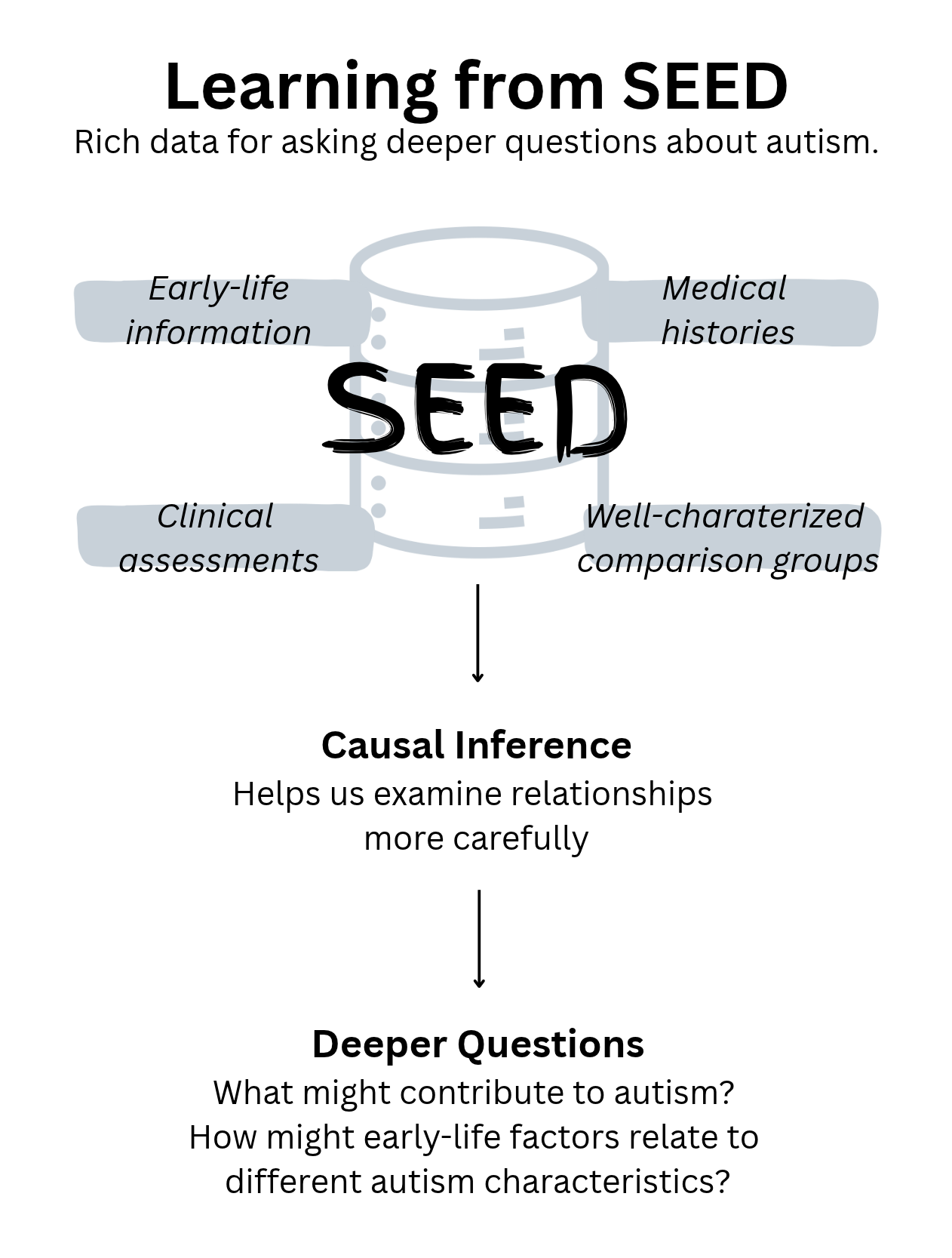
18 Sep 2026CDC’s Study to Explore Early Development (SEED) is particularly well positioned to support causal inference research in autism. Conducted across multiple phases, SEED has built a rich and deeply characterized research resource that brings together a large and diverse sample, detailed information on prenatal and early-life factors, medical histories, rigorous clinical assessments, and well-characterized comparison groups.
These features provide an unusually strong foundation for moving beyond observed associations toward causal questions: under clearly stated assumptions, what can relationships in the data tell us about factors that may contribute to autism and its heterogeneity?
Through ADSI, we are building on the depth of SEED by applying modern causal inference methods to examine these questions and strengthen how observational autism data are interpreted.