02 Sep 2026
UW–Madison ADSI Team Participates in NIH Public Webinar
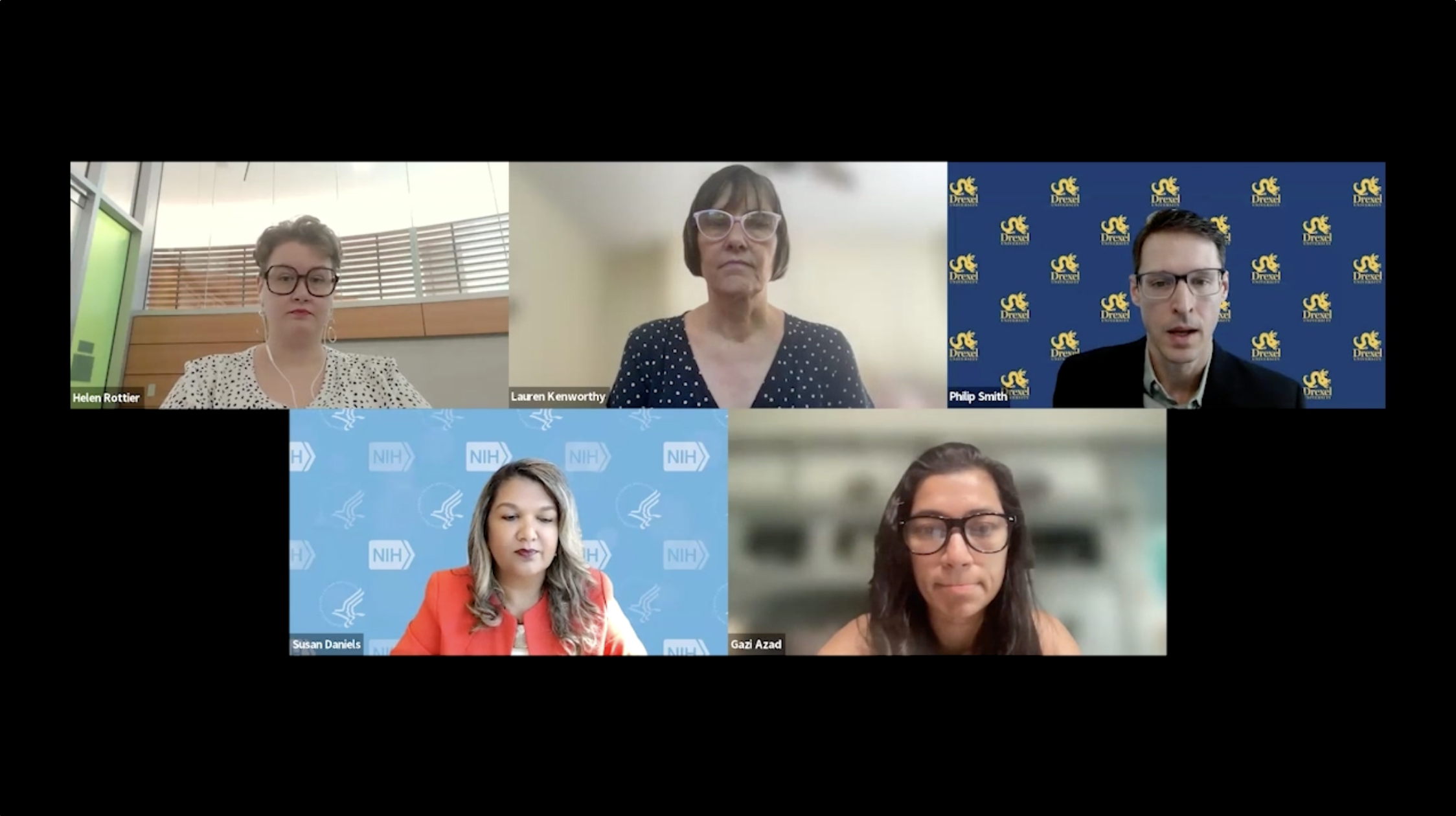
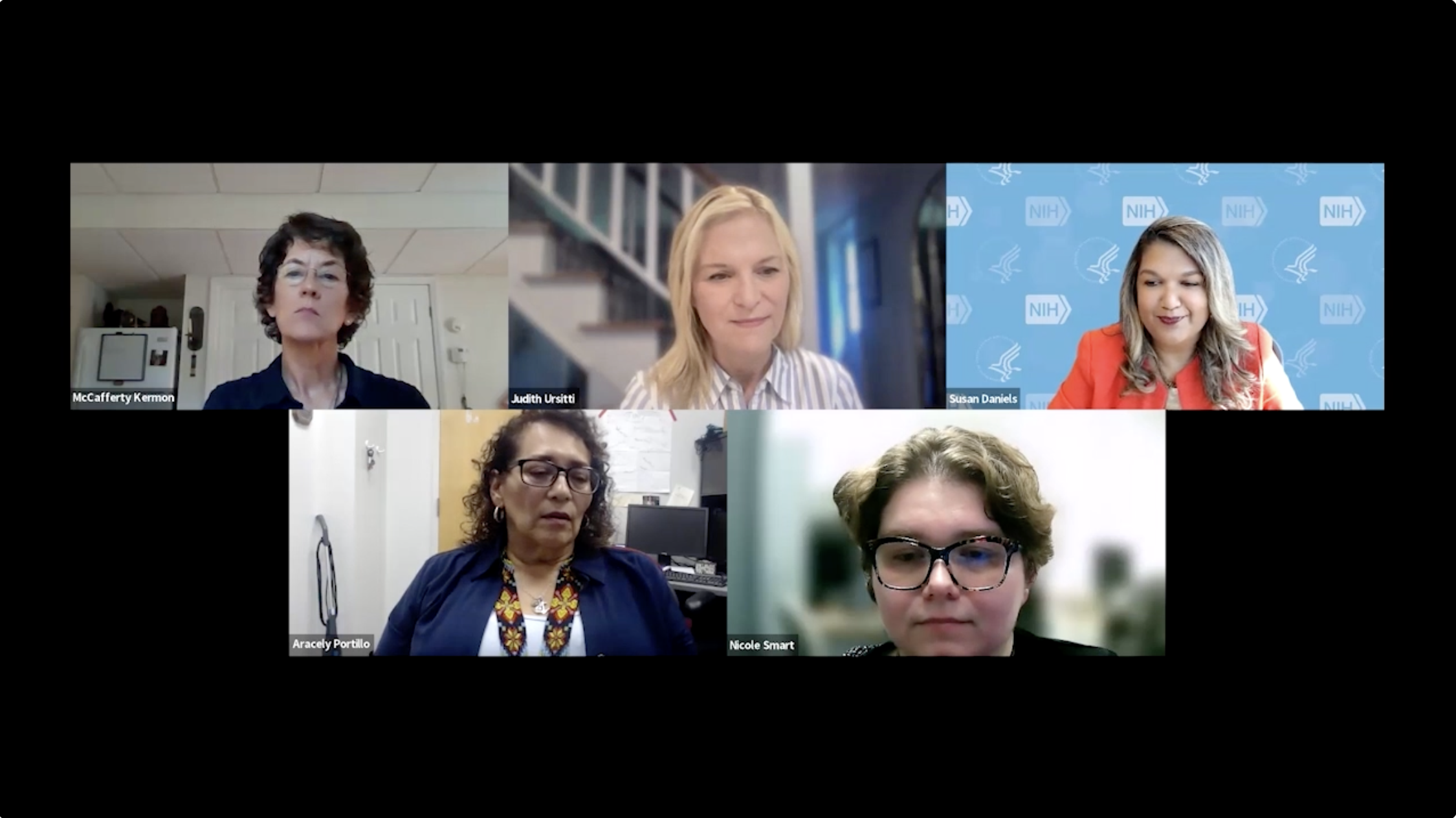
On August 19, members of the UW–Madison Autism Data Science Initiative (ADSI) team participated in the NIH public webinar, “Autism Data Science Initiative: Research Progress and Future Directions.” The national webinar highlighted progress across the 13 ADSI-funded research projects and included discussions of community engagement, research on autism prevalence and potential causes, clinical services and treatments, and approaches to validation and replication.
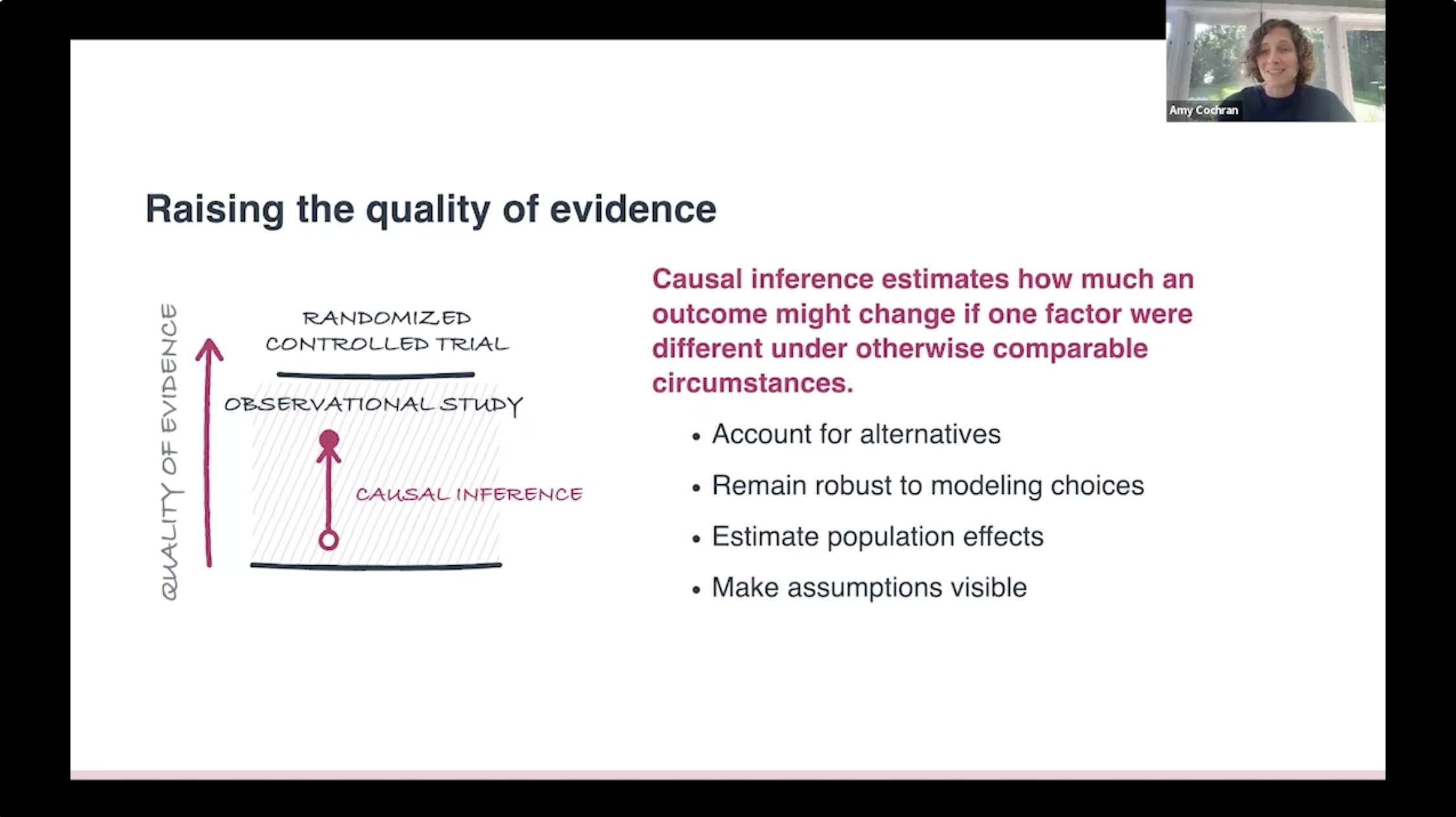
Our project was represented from three important perspectives. Helen Rottier, co-lead for community engagement, and Aracely Portillo, a member of our Community Advisory Board, participated in the panel on the role of community engagement in ADSI. Amy Cochran, the project’s Principal Investigator, presented the UW–Madison team’s research progress and future directions.
Their participation reflects an important principle of our project: advancing the science while creating meaningful opportunities for lived experience and community perspectives to inform the research process.
The webinar recording is available through NIH VideoCast:
Watch the NIH ADSI Public Webinar
UW–Madison ADSI participation in the NIH public webinar included perspectives from community engagement leadership, the Community Advisory Board, and the research team.
31 Jul 2026
Selecting early-life variables for autism research is not straightforward. Researchers must consider scientific evidence, causal plausibility, public health relevance, developmental timing, data quality, and how related variables interact within an analytic model.
Through facilitated dialogue across three Community Advisory Board meetings, the UW–Madison ADSI team examined these questions alongside perspectives grounded in lived experience. Scientific and community perspectives did not always align, but those differences helped clarify assumptions, identify missing context, and strengthen the final decisions.
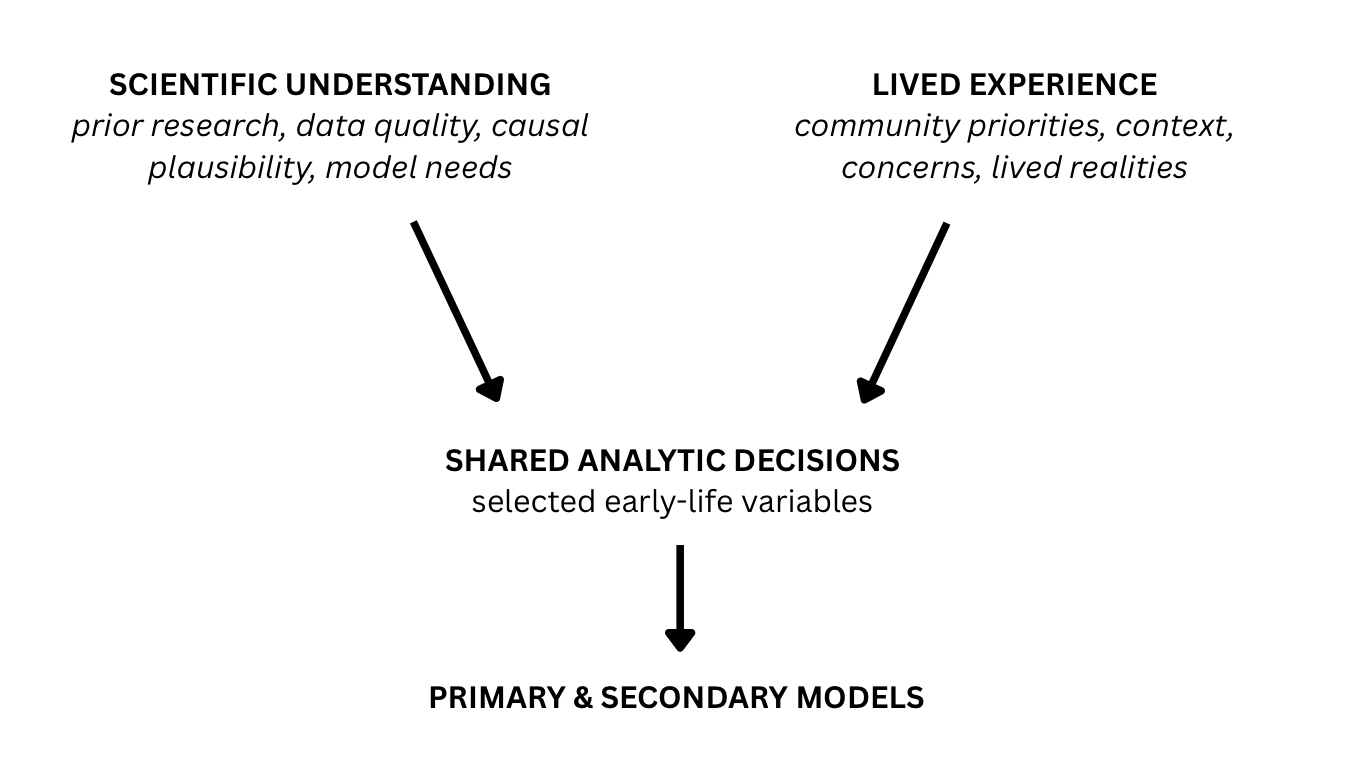
We are celebrating an important milestone from the recent CAB Meeting #4: together, we arrived at a set of early-life variables informed by both scientific knowledge and lived experience. We are now preparing these variables for the primary and secondary analytic models, with greater confidence that they are relevant and meaningfully represented for examining their potential associations with autism development.
Scientific knowledge and lived experience come together to examine assumptions and guide the selection of early-life variables for the primary and secondary analytic models.
18 May 2026
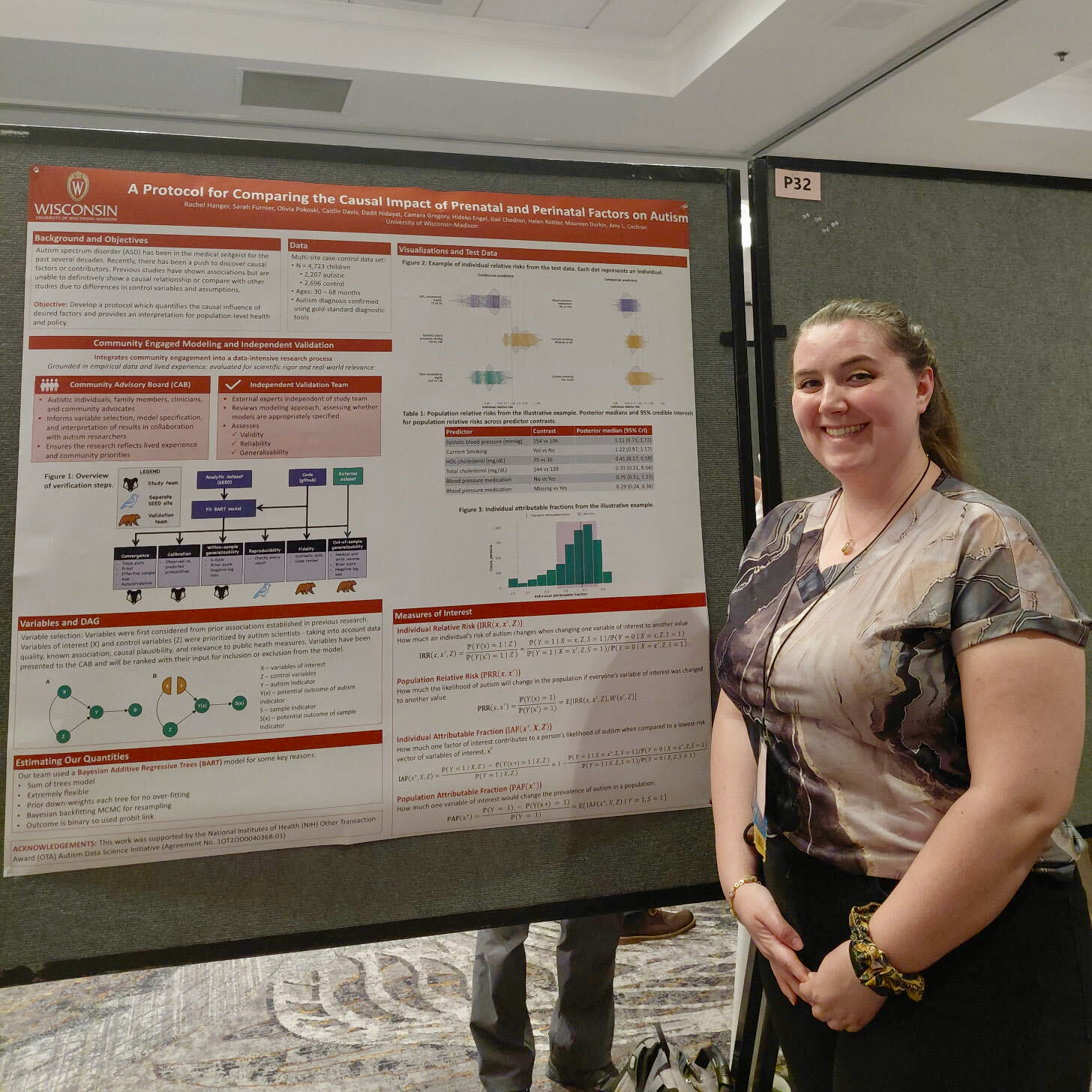
A research poster was presented at the 2026 Society for Causal Inference Conference (Salt Lake City, Utah). The poster describes how researchers study early-life factors and autism when experiments are not possible. Because researchers cannot ethically or practically conduct experiments during pregnancy or early childhood, understanding these relationships requires careful use of observational data and explicit assumptions. The protocol introduces a transparent, community-informed framework for comparing multiple factors within a single analysis and for interpreting what conclusions can—and cannot—be drawn from the results.
Rachel Hanger presenting a research poster at the 2026 Society for Causal Inference Conference. (Photo credit: Anna Pham.)
01 May 2026
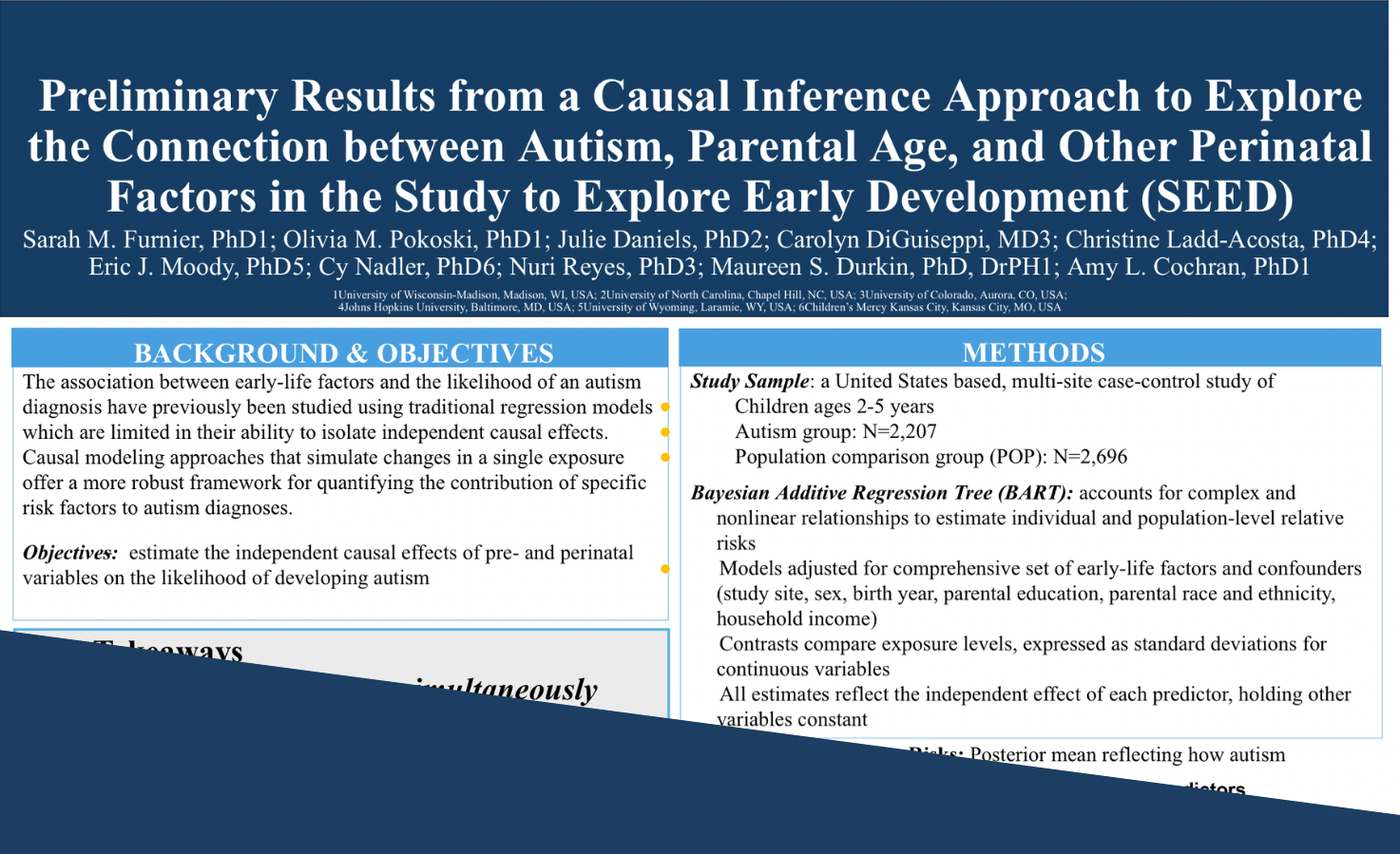
We presented a research poster at the 2026 International Society for Autism Research (INSAR) Conference (Prague, Czech Republic). This poster applies a new analytic approach to better understand how multiple prenatal, birth, and early-life factors may relate to autism. Rather than examining one factor at a time, the study evaluates many factors together within the same analysis. The goal is to improve our understanding of the complex combination of experiences that may be associated with autism and to inform future research on autism characteristics and support needs.
30 Apr 2026
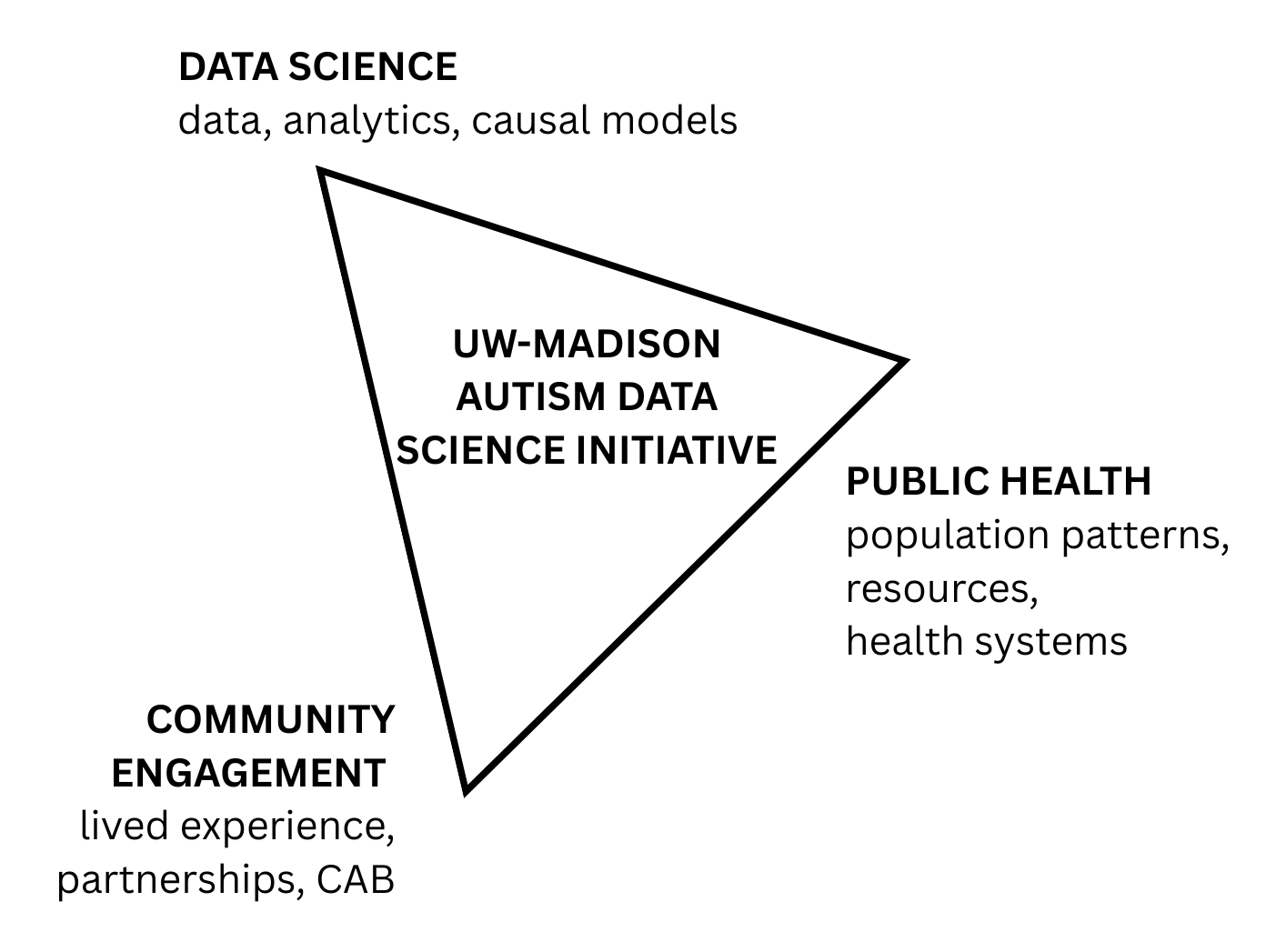
Our approach is built on three pillars:
- data science,
- public health, and
- community engagement.
Data science allows us to make use of large and complex sources of information, while public health helps us understand how individual experiences connect to broader population patterns, resources, and health systems. Community engagement ensures that autistic individuals, families, clinicians, and advocates have a meaningful role in shaping the research process. By bringing these perspectives together, we aim to produce research that is both methodologically rigorous and responsive to the priorities, concerns, and lived experiences of the autism community.
UW–Madison ADSI brings together data science, public health, and community engagement to support rigorous, community-informed autism research.