About
We are one of the funded projects from the Autism Data Science Initiative (ADSI). You can read more about our specific project here.
ADSI is a data-driven research collaboration that brings together many types of information—including behavioral, genetic, perinatal, and environmental data—to better understand the factors that influence autism and treatment outcomes.
By integrating these data sources, researchers can examine how they interact rather than studying them in isolation. The initiative brings together epidemiologists, data scientists, and autism experts including community members with lived experience to collectively explore what contributes to autism and how to improve health outcomes for autistic individuals.
Our Research Aims
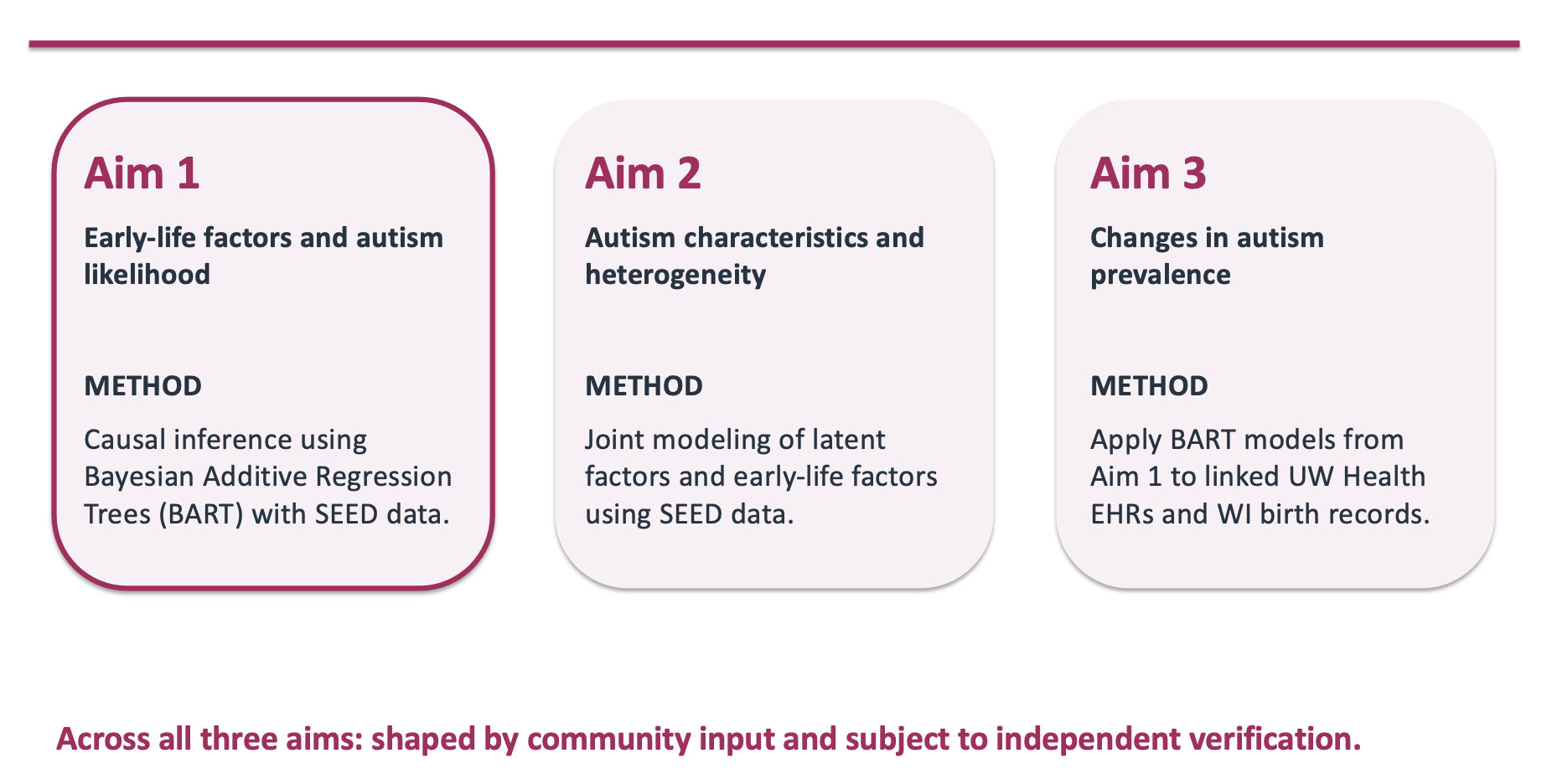
Our UW–Madison project focuses on three interconnected research aims, as illustrated below.
MPIs: Amy Cochran and Maureen Durkin