From Variable Selection to Analytic Models
31 Jul 2026Selecting early-life variables for autism research is not straightforward. Researchers must consider scientific evidence, causal plausibility, public health relevance, developmental timing, data quality, and how related variables interact within an analytic model.
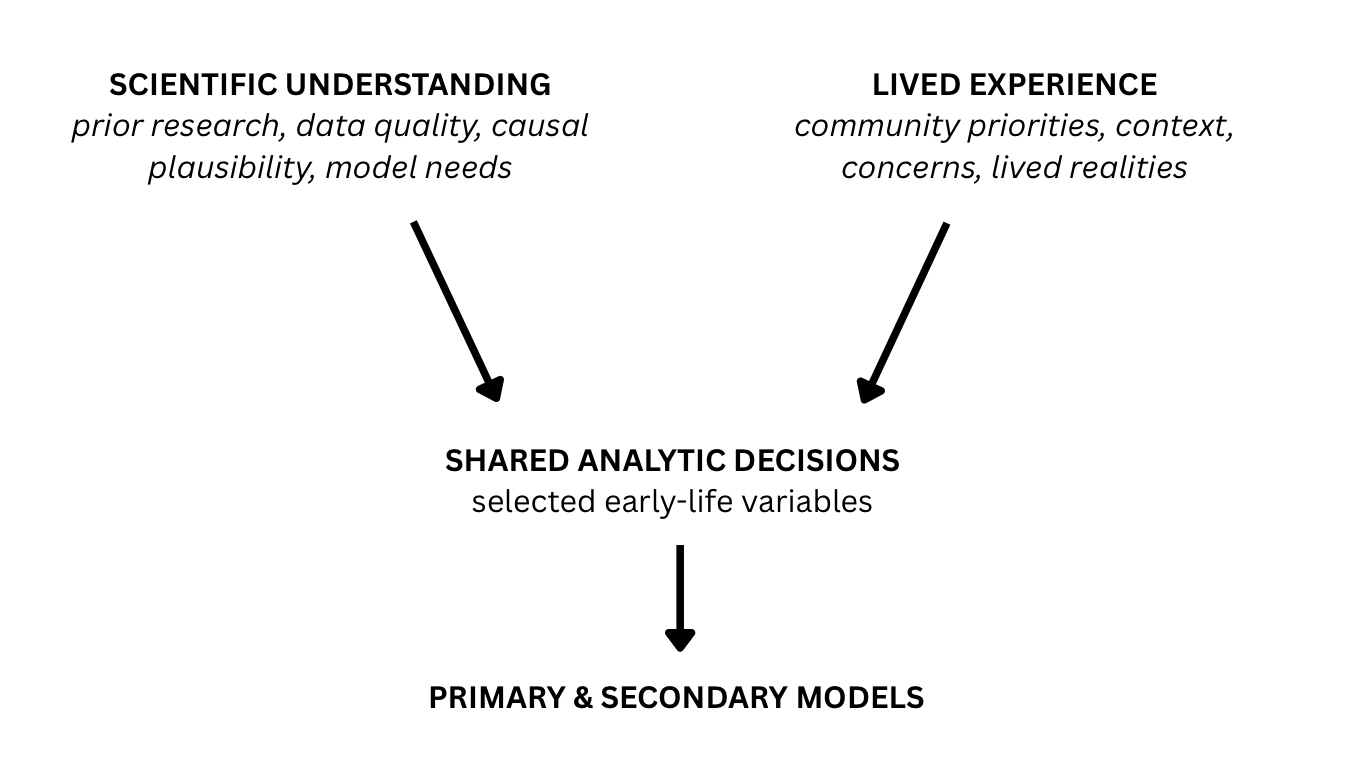
Through facilitated dialogue across three Community Advisory Board meetings, the UW–Madison ADSI team examined these questions alongside perspectives grounded in lived experience. Scientific and community perspectives did not always align, but those differences helped clarify assumptions, identify missing context, and strengthen the final decisions.
We are celebrating an important milestone from the recent CAB Meeting #4: together, we arrived at a set of early-life variables informed by both scientific knowledge and lived experience. We are now preparing these variables for the primary and secondary analytic models, with greater confidence that they are relevant and meaningfully represented for examining their potential associations with autism development.